|
|























|
|
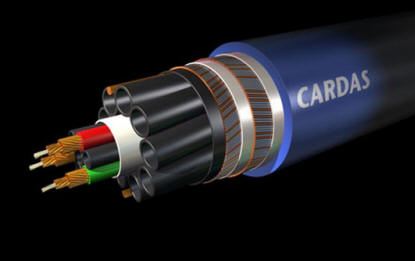
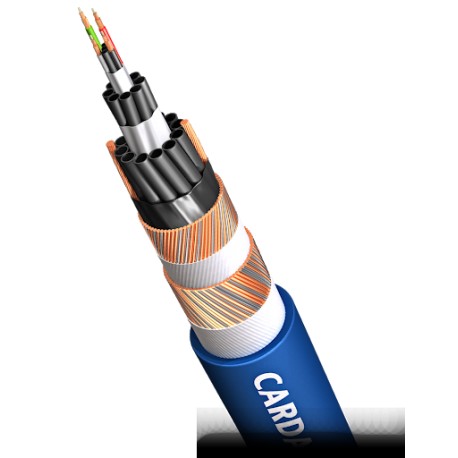
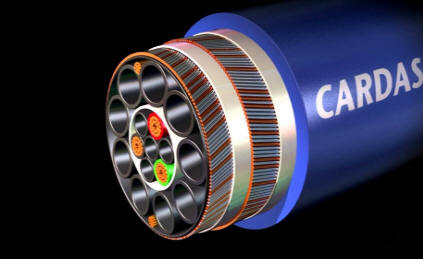
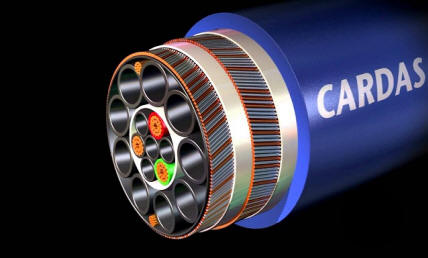
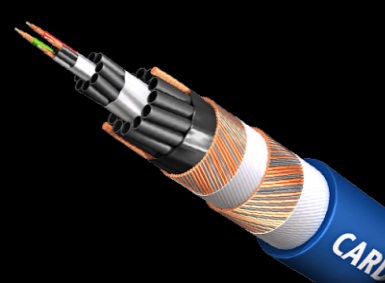
Why Cardas? Cardas’ cable design incorporates patented, Golden Ratio, Constant Q, Cross-Field, pure copper Litz, conductor technology. Why should I use it? What will it do for my system? It is said, wire is just wire. In reality, a high-end audio cable must balance resistance, capacitance, inductance, conductance, velocity of propagation, RF radiation and absorption, mechanical resonance, strand interaction, high filtering, reflections, electrical resonance, dissipation factors, envelope delay, phase distortion, harmonic distortion, , structural return loss, corrosion, cross-talk, bridge-tap and the interaction of these and a hundred other things. As a high-end cable manufacturer, Cardas Audio strives to address every detail of cable and conductor construction, no matter how small. An elegant solution deals with quality, not quantity. Cable geometry problems are resolved in the cable’s design, not after the fact with filters. George Cardas received U.S. Patent Number 4,628,151 for creating Golden Section Stranding Audio Cable. It is truly unique. George introduced the concept of Golden Section Constant "Q" Stranding to high-end audio, but Golden Ratio, 1.6180339887... : 1 is as old as nature itself. Golden Ratio is the mathematical proportion of life itself, the heart of musical scales and chords. "Discovered" by the Greeks, but used by the Egyptians in the Great Pyramid centuries before, man has employed Golden Ratio to create his most beautiful and naturally pleasing works of art and architecture The signal used by your system, be it digital or analog, through tube or solid state, is always alternating current. The cyclic effect of alternating current vibrates the wire in your system like the strumming of a guitar string. The beating of the capacitive, inductive and mechanical elements in audio cable is set in motion by the transient energy of the audio signal, just as the guitar string is set into motion by the strike of a pick. This form of vibration or resonance distorts the audio signal and produces many sound anomalies, from colored bass to glare. Every interconnect, every speaker cable, every chassis and speaker wire has its own resonant signature. Like the mass, tension and hardness of the guitar string, the mass, tension and hardness of the conductor, coupled with its inductance and resistance, and the capacitance of the cable, determine what sound is made. Each strand in a cable has its own note or beat. Conductor strands interact with other same sized, near unison, and multiplistic sized strands creating beats the same way a cube listening room would, or one with multiplistic dimensions like 8’ x 16’ x 32. Stereo systems depend on the purity of the audio signal. When the cable linking all components together imparts its own sound, the audio signal is corrupted. Cardas created a conductor that absorbs or cancels the noise released by the current fluxuation, by progressively layering strands that share no common resonant multiple. This conductor uses the same mathematical proportioning seen in the worlds greatest concert halls for essentially the same reasons. The infinite indivisibility of the Fibonacci Sequence or Golden Section is a key to controlling resonance. The ratio of ø (Phi), or 1 to 1.6180339887... to (infinity), is the Golden Mean, called Golden Ratio or Golden Proportion. George Cardas holds the patent, U.S. Patent Number 4,628,151, where the ratio of ø is applied to any electrical conductor. In Golden Section Stranding, individual strands are arranged so each strand is coupled to another, whose note or beat is irrational with its own, thus nulling interstrand resonance. This is the famous "Silent Conductor". It is the silence of Cardas conductors that allows them to be so uniquely musical and pure. At the heart of cable oscillation is delayed or stored energy. This energy results from the lowered internal "Q", or resonant point, of conventional conductors. George Cardas has a second U.S. patent, number 4,980,517, describing a unique stranding method where strands diminish in size towards the interior of the conductor. This design is called Constant Q Stranding and it allows each strand of the cable to share the load equally. It is a very effective method of reducing the Non-linearity seen in conventional conductors, without compromising the symmetry of the conductor or the capacitance of the cable. Ordinary Cables are di-pole antennas, both radiating and absorbing RFI/EMI, which sustains system resonance. George’s cable design incorporates Crossfield Construction in its manufacture, which reverses every other stranding layer to defuse the di-pole effect and match conductor propagation to that of surrounding dielectric materials. Cable resonance is further reduced through the use of ultra pure copper, air dielectrics and state of the art connection techniques. Our ultra pure and homogeneous metals have proven to be the best conductors for audio signals. Cardas uses diamond dies exclusively, drawing the strands in a hydrogen reduction atmosphere. This process reduces the amount of impurities and eliminates the surface contamination that occurs when standard metal dies are used. As each strand is drawn, the resultant ultra pure surface is immediately given a urethane enamel "Litz" coating. This is a continuous process that results in a perfectly insulated strand and ultimate longevity of the conductors. Ordinary uncoated copper stranding corrodes in a relatively short time. Cardas meticulously maintains the purity of the conductor strands until they are sealed at termination. Hydrogen Reduction Drawing Machine Every detail in Cardas cables is at the leading edge. Pure Teflon® is used as a stabilizing wrap to firmly bind the conductors, while thin wall tubes provide an air dielectric to isolate the conductors from each other. Cardas defines the state of the art with a perfect joining of conductor to connector. All connectors are custom machined with rhodium over silver contact surfaces. Finally, to insure the quality of each cable, they are terminated by hand and individually inspected. It is this meticulous attention to details in design, care and construction that defines Cardas.
clicca su immagine per scricare listino Cardas completo Pagina in allestimento
CARDAS CLEAR BEYOND RCA/XLR
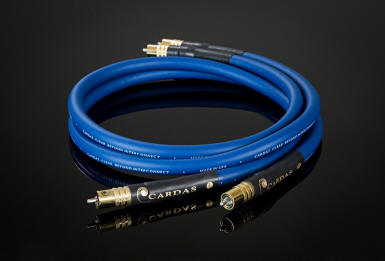
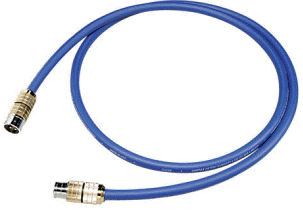
Prestazioni Clear Beyond Interconnect, la nostra interconnessione di punta per eccellenza e una meraviglia del moderno design dei cavi, presenta i nostri conduttori di propagazione abbinati più avanzati. Clear Beyond Interconnect apporta notevoli miglioramenti nell'imaging spaziale, nella dinamica e nell'impatto a bassa frequenza, pur mantenendo la classica musicalità Cardas. Clear Beyond Interconnect si basa su oltre 30 anni di dedizione incessante di Cardas Audio alla perfezione dei cavi ad alte prestazioni. La schermatura superiore e la geometria avanzata della sospensione del tubo dell'aria si traducono in un O.D. di .511", che richiede l'uso del nostro adattatore XRCA 13 per la terminazione single-ended e un CG XLR riprogettato per cavi bilanciati. Più di ogni altra cosa, Clear Beyond Interconnect è musicale. L'equilibrio tonale è completamente neutro con velocità e trasparenza insuperabili. Ogni paio è realizzato su ordinazione e terminato a mano solo dai nostri tecnici senior. Terminazioni standard: Cardas SRCA o CG XLR Progettazione/costruzione Conduttori: Nucleo in kevlar a propagazione abbinata, grado 1 ultra fine, rame privo di ossigeno puro al 99,9999% con rivestimento trasparente SPN (Litz), dimensioni del calibro scalate alle proporzioni del rapporto aureo e gamma da 47 AWG a 39 AWG. Geometria dello strato incrociato, isolato in una guaina in PTFE estruso ultra sottile. Geometria: Star-Quad 4 conduttori con tubi d'aria in LDPE antistatico legati con nastro in PTFE impregnato di carbonio. Lo strato esterno utilizza tubi d'aria in PTFE scalati 1.618 volte più grandi dei tubi centrali per sospendere lo schermo composito di rame stagnato e filo magnetico lontano dai conduttori che trasportano il segnale. Rifinito in una giacca in TPR estruso ultra morbido. Calibro: 4x26,5 AWG Diametro esterno: 0,511”/13 mm
Performance Clear Beyond Interconnect, our ultimate flagship interconnect and a marvel of modern cable design, features our mostadvanced Matched Propagation Conductors. Clear Beyond Interconnect brings noteworthy improvements in spatial imaging, dynamics, and low frequency impact while retaining the classic Cardas musicality. Clear Beyond Interconnect builds on over 30 years of Cardas Audio’s relentless dedication to the perfection of highperformance cables. Superior shielding and advanced air-tube suspension geometry result in an O.D. of .511”, whichnecessitates the use of our XRCA 13 adaptor for single-ended termination, and a re-designed CG XLR for balanced cables. More than anything, Clear Beyond Interconnect is musical. Tonal balance is completely neutral with unsurpassed speed and transparency. Each pair is made to order and hand terminated only by our senior technicians. Standard Terminations: Cardas SRCA or CG XLR Design/Construction Conductors: Matched Propagation Kevlar core, ultra fine Grade 1, 99.9999% pure oxygen free copper with SPN clear coat (Litz), gauge sizes scaled to Golden Ratio proportions and range from 47 AWG to 39 AWG. Cross-field layer geometry, insulated in ultra thin extruded PTFE jacket. Geometry: Star-Quad 4 conductors with anti-static LDPE ai r-tubes bound with carbon impregnated PTFE tape wrap. Outer layer uses PTFE air-tubes scaled 1.618 times larger than the core tubes to suspend the composite shield of tinned copper and magnet wire away from the signal carrying conductors. Finished in an ultra soft extruded TPR jacket. Gauge: 4x26.5 AWG Outside Diameter: 0.511”/13mm
CARDAS CLEAR RCA/XLR
Performance Completamente neutrale e trasparente. Dinamica superba, estensione ad alta frequenza e velocità. La nostra interconnessione di punta progettata per sistemi di livello di riferimento in sale di ascolto acusticamente neutre. Controllo perfetto su tutta la gamma di frequenze. Estrae ogni dettaglio e rimane musicale. Funziona alla grande in tirature lunghe o brevi. Terminazioni standard: Cardas SRCA o CG XLR Progettazione/costruzione Conduttori: Nucleo in kevlar a propagazione abbinata, grado 1 ultra fine, rame privo di ossigeno puro al 99,9999% con rivestimento trasparente SPN (Litz), dimensioni del calibro scalate alle proporzioni del rapporto aureo e vanno da 41 AWG a 39 AWG. Geometria dello strato incrociato, isolato in una guaina in PTFE estruso ultra sottile. Geometria: triade equilatera a 3 conduttori con tubi d'aria in LDPE antistatico legati con nastro in PTFE impregnato di carbonio. Lo strato esterno utilizza tubi d'aria in PTFE scalati 1.618 volte più grandi dei tubi centrali per sospendere lo schermo composito di rame stagnato e filo magnetico lontano dai conduttori che trasportano il segnale. Rifinito in una giacca in TPR estruso ultra morbido. Calibro: 3x25,5 AWG Diametro esterno: 0,450"/11,43 mm
CARDAS REFLECTION RCA/XLR
CARDAS LIGHT RCA/XLR
CARDAS CROSS RCA/XLR
CARDAS SKY RCA/XLR
CARDAS PARSEC RCA/XLR
CARDAS MICROTWIN RCA/XLR
CARDAS CROSSLINK RCA/XLR
CARDAS CLEAR BEYOND SPEAKERS
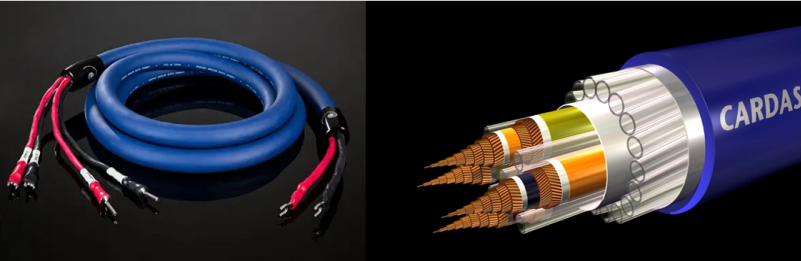
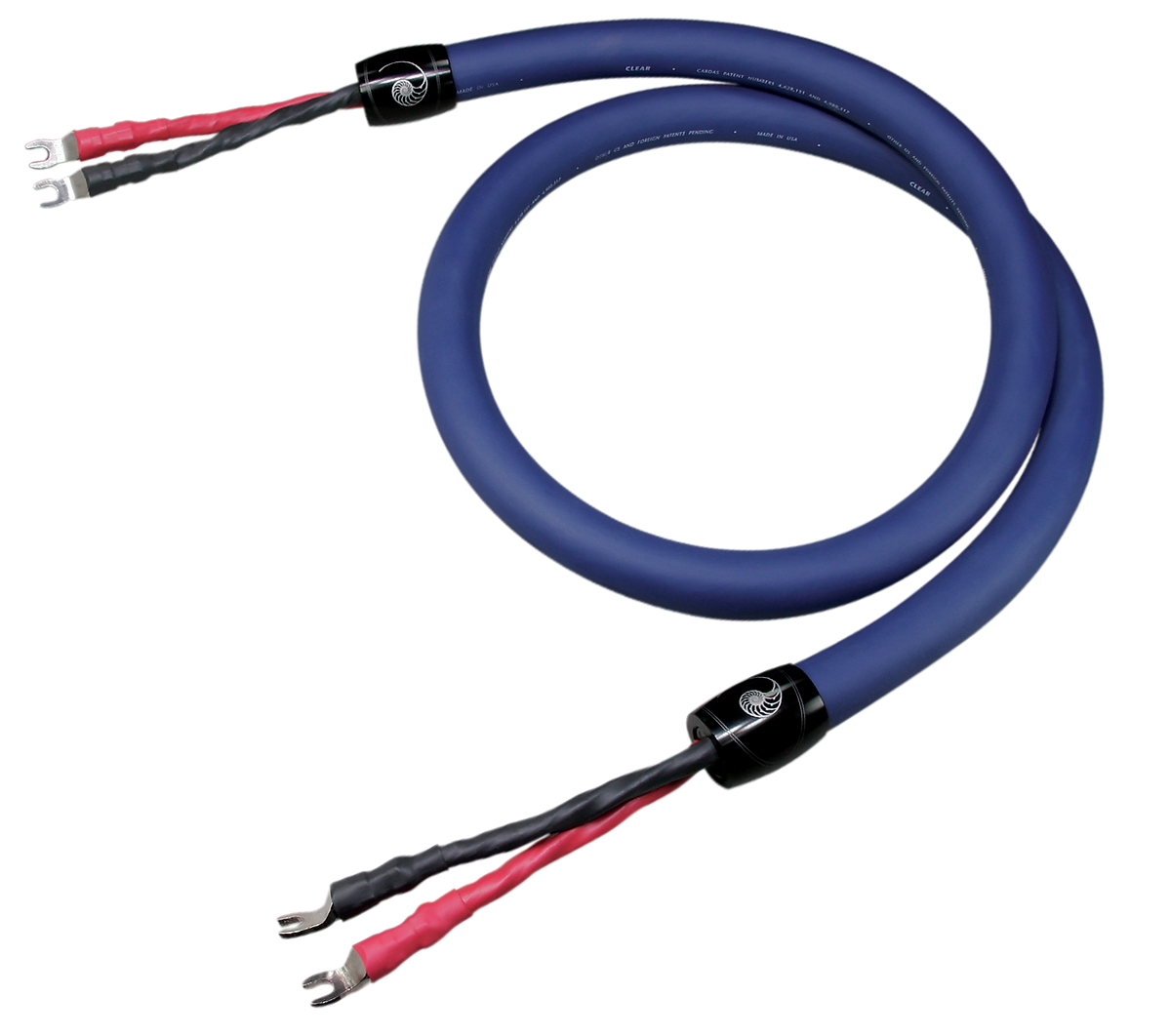
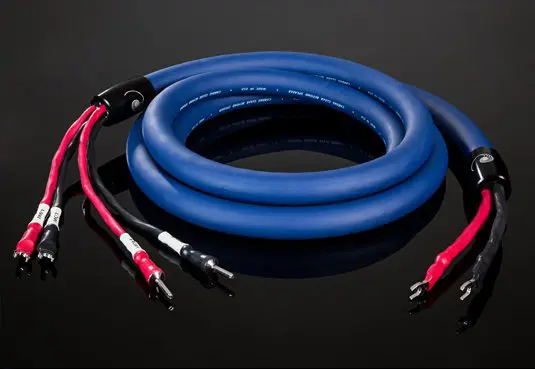
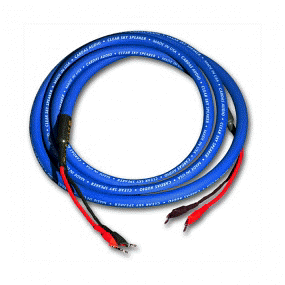
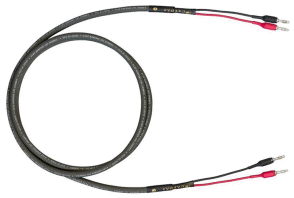
Prestazioni: Clear Basato sul cavo per altoparlanti Clear e sviluppato per andare oltre le prestazioni di riferimento in sistemi senza oggetti di costo in cui gli altoparlanti richiedono grandi quantità di flusso di corrente. L'altoparlante Clear Beyond è assolutamente neutro e trasparente. Perfettamente bilanciato con bassi articolati e alti delicati. Dinamica incredibile con compressione zero. Questo cavo è come far passare due paia di Clear Speaker all'interno di una guaina e può essere bi-cablato o bi-amplificato internamente.Terminazioni standard: Cardas picche o banane, forgiate a compressione utilizzando 10.000 psi Design/Costruzione: Nucleo in kevlar a propagazione abbinata, grado 1, Rame privo di ossigeno puro al 99,9999% con rivestimento trasparente SPN (Litz), dimensioni del calibro ridimensionate in proporzioni auree che vanno da 41 AWG ultra fine a 25 AWG. Geometria dello strato incrociato, isolata in una giacca avvolta da nastro FEP. Geometria: Otto conduttori avvolti concentricamente con tubi dell'aria in PTFE antistatico e rivestimento esterno flessibile in TPR. Calibro: 8x10,5 AWG Diametro esterno: 0,934"/23,72 mm
CARDAS CLEAR SPEAKERS
Il cavo per altoparlanti più musicale e rivelatore mai prodotto da Cardas Audio. Progettato per essere completamente trasparente e olografico, questo cavo abbina il leggendario suono Cardas con una resa dei dettagli spietata. Terminazioni standard: picche Cardas o banane forgiate usando 10.000 psi a Bandon Oregon. Non disponibile con bi-wire interno. Guarda i nostri Clear Jumper per applicazioni bi-wire. Progettazione/Costruzione: Conduttori: nucleo in kevlar a propagazione abbinata, grado 1, rame privo di ossigeno puro al 99,9999% con rivestimento trasparente SPN (Litz), dimensioni del calibro ridimensionate in proporzioni auree che vanno da ultra fine 41 AWG a 25 AWG. Geometria dello strato incrociato, isolata in una giacca avvolta da nastro FEP. Geometria: quattro conduttori avvolti concentricamente circondati da fibre antistatiche con un rivestimento esterno flessibile in TPR. Nota: a differenza della maggior parte dei nostri cavi per altoparlanti, Clear Speaker non può essere bi-cablato. Per le massime prestazioni utilizzando Clear su un altoparlante bi-wire, utilizza i Clear Jumper. Calibro: 4x10,5 AWG Diametro esterno: 0,675"/17,14 mm
CARDAS CLEAR REFLECTION SPEAKERS
CARDAS CLEAR LIGHT SPEAKERS
CARDAS CROSS SPEAKERS
CARDAS CLEAR SKY SPEAKERS
CARDAS PARSEC SPEAKERS
CARDAS CROSSLINK SPEAKERS
C
CARDAS 101 SPEAKERS
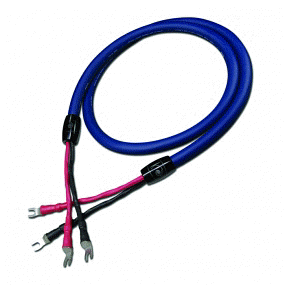
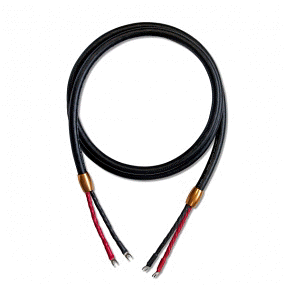
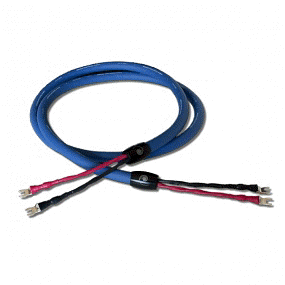
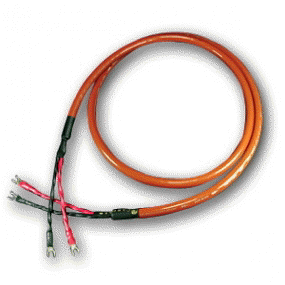
GOLDEN Cross Speaker At the top of our Cross line of cables, Golden Cross is one of our most musical speaker cables. It is suitable for any loudspeaker, and is internally bi and tri wireable. Cross Speaker now has a softer, more flexible jacket, with a new color (as pictured). Technical Specifications: Construction .600" O.D., Cardas copper, PFA dielectric, 4 x 15.5 AWG & 8 x 11.5 AWG conductors, Golden section, litz, Alcryn jacket (previously had burgundy colored urethane jacket). Measurements: Capacitance: 154 pf/ft Inductance: .0368 uh/ft Termination Options: 1/4" (6mm), pure copper, rhodium/silver plated spades are standard. 9mm spades, bananas, and Maggy pins also available.
CARDAS BEYOND POWER XL
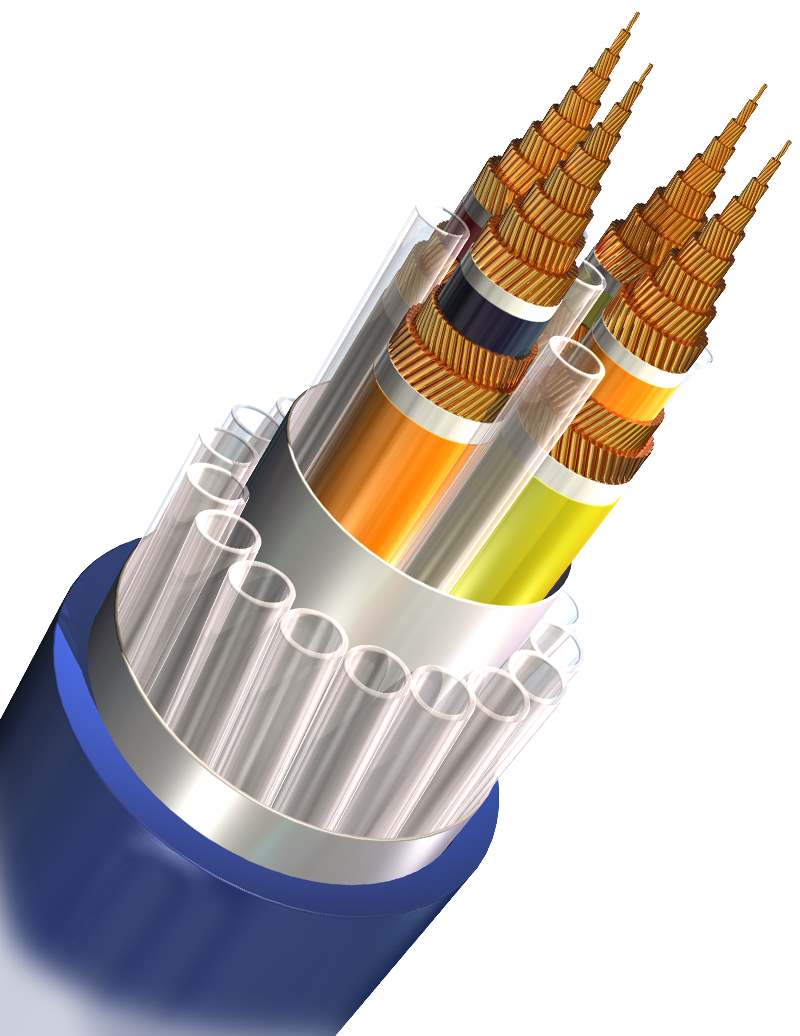
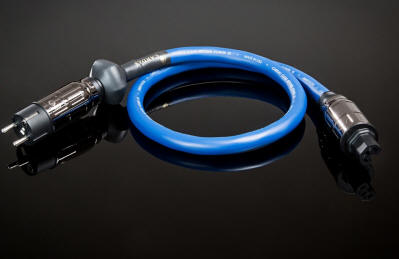
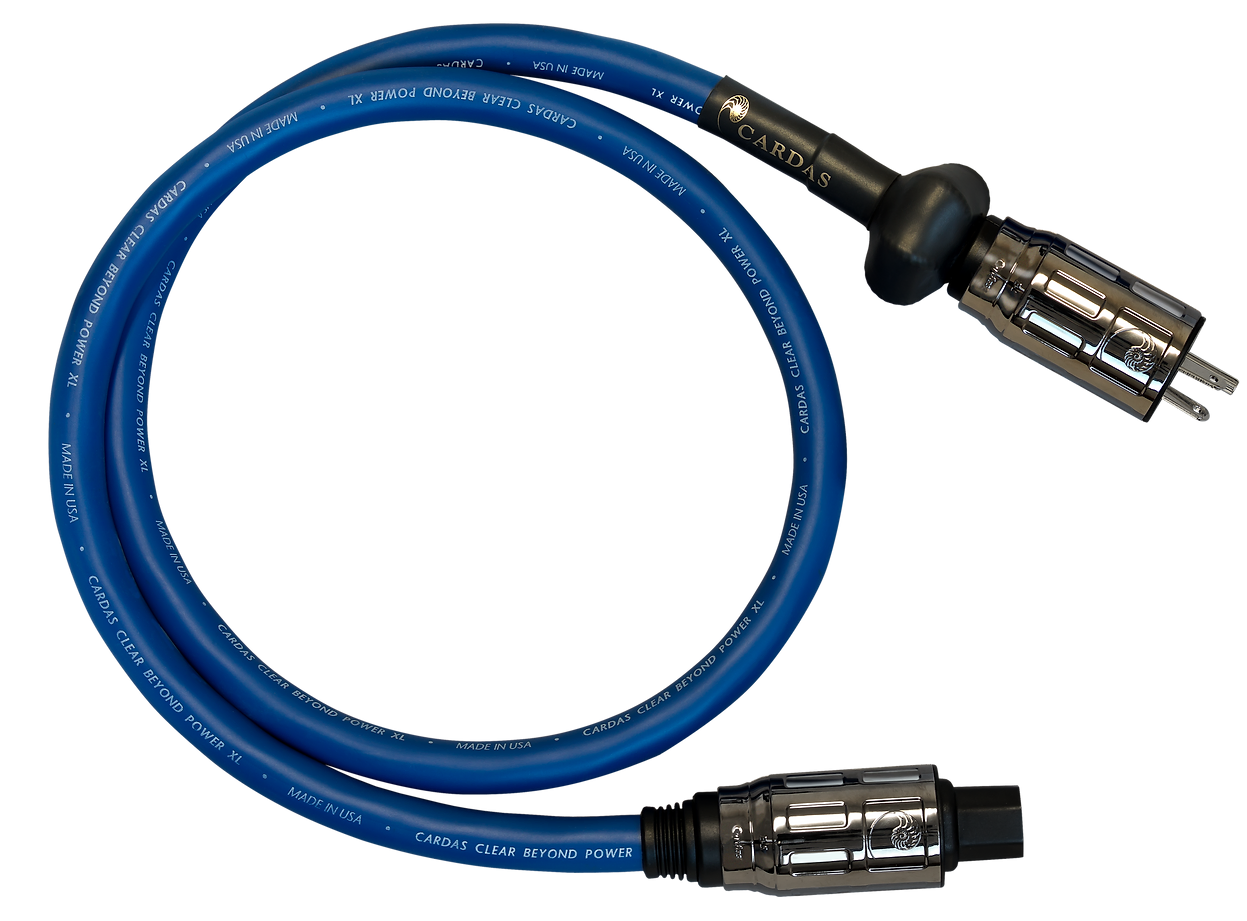
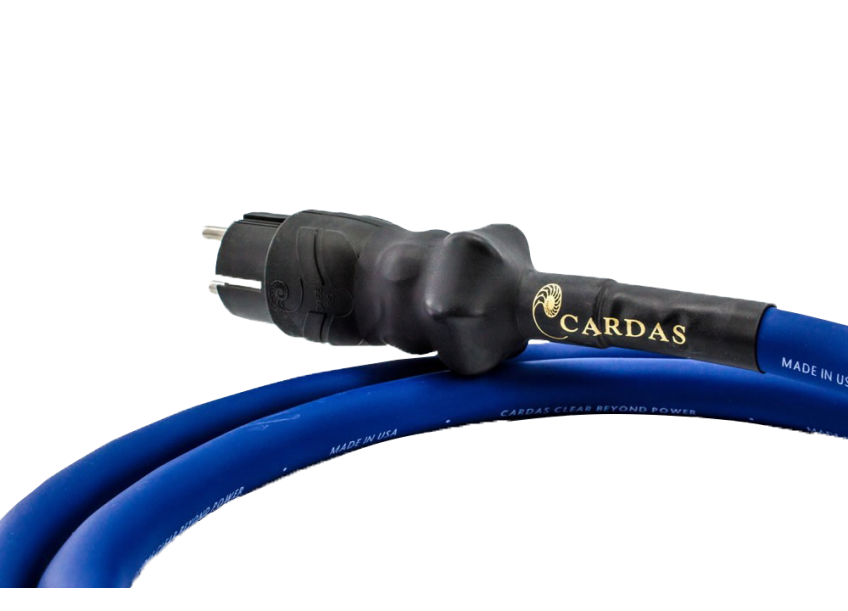
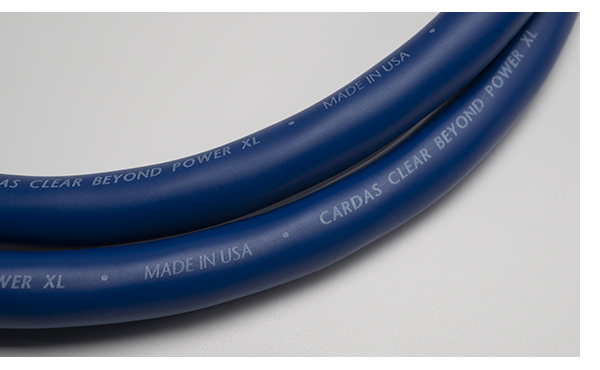
Per creare Clear Beyond Power XL, abbiamo preso il nostro molto popolare Clear Beyond Power e abbiamo ampliato tutto. Conduttori più grandi, migliore schermatura e migliore filtraggio del rumore. E poi ha aggiunto un altro livello di filtraggio del rumore, estendendo il percorso verso terra fino a tre volte la lunghezza del cavo stesso attraverso una geometria semplice e aggraziata che poteva venire solo dalla mente di George Cardas. Questo è il nostro cavo di alimentazione più sofisticato di sempre ed è progettato per fornire agli amplificatori più grandi e affamati di potenza una corrente elevata e pulita, fornendo allo stesso tempo ai componenti della sorgente sensibile la potenza stabile, chiara e priva di rumore di cui hanno bisogno per la massima fedeltà assoluta. Terminato con i nostri nuovissimi connettori Cardas E-5 premium, con superfici di contatto in rame placcato argento/rodio, Clear Beyond Power XL è progettato per l'elettronica più esigente. Terminazioni standard: spine di alimentazione premium Cardas E-5 saldate e crimpate con contatti in rame massiccio placcati argento/rodio. Terminato a mano a Bandon, nell'Oregon. Conduttori di progettazione/costruzione: rame stagnato puro al 99,9999% senza ossigeno, dimensioni del calibro ridimensionate in proporzioni auree. Geometria a strati incrociati, isolata in una giacca in TPE. Ogni conduttore ha più lunghezze di posa e ha il proprio schermo. Geometria: L'intero cavo è a doppia schermatura con rame stagnato e filo smaltato. Triade ritorta mista a tubi d'aria in PVC legati con nastro adesivo FEP. Rivestimento esterno in TPR super flessibile Filtrazione: un filtro di terra toroidale è integrato nella terminazione e funziona all'unisono con un sistema di estensione della gamba a terra. Calibro: 3x9 AWG Diametro esterno: 0,715”18,17 mm
 .jpg) 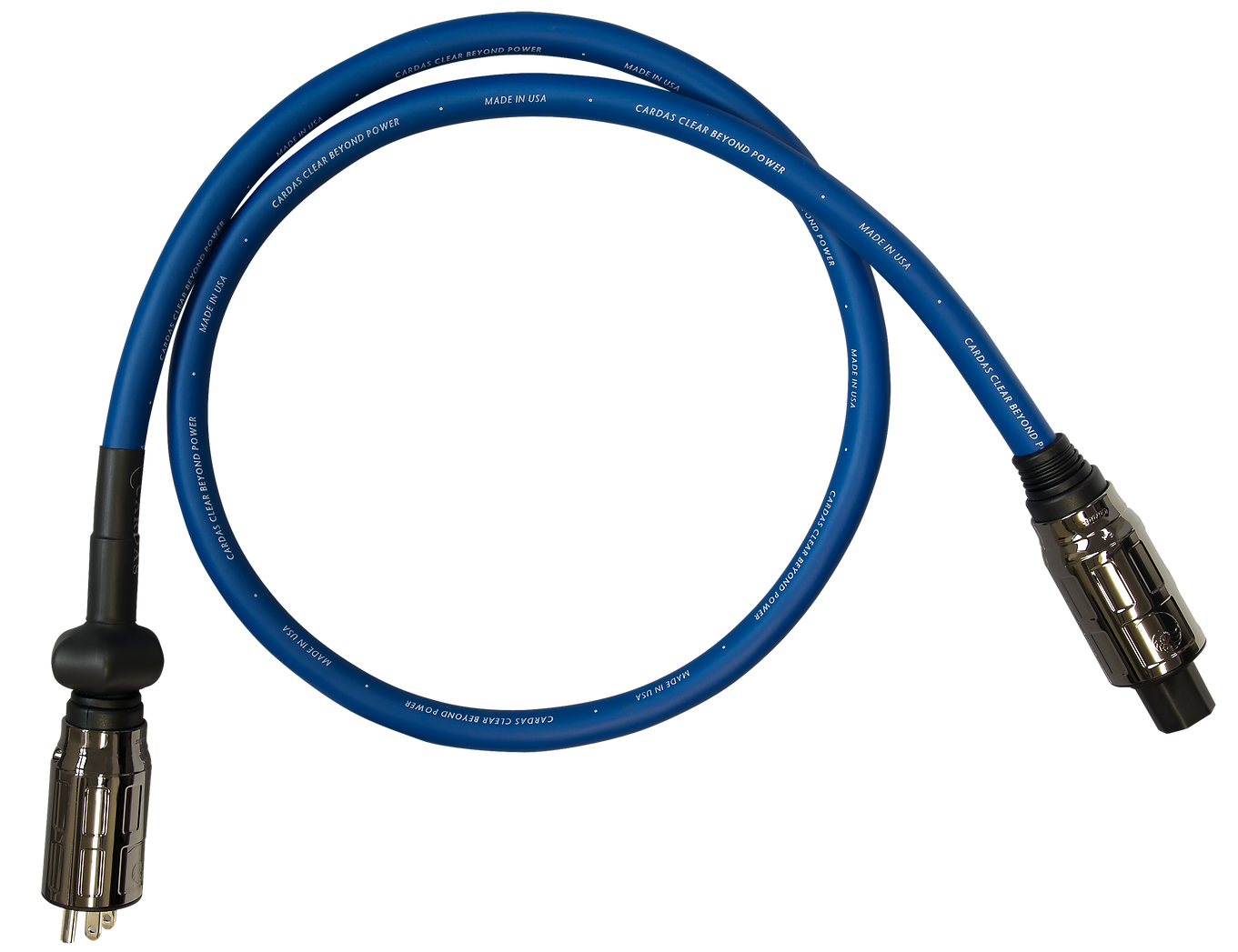 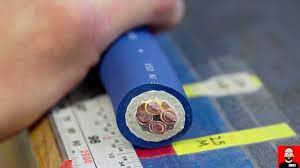  CARDAS BEYOND POWER
Clear Beyond Power Performance Progettato per portare l'erogazione di corrente e la filtrazione della potenza a un livello superiore... Clear Beyond Power adotta l'approccio "più grande è meglio". I conduttori più grandi forniscono più potenza e il nostro filtro più grande pulisce la linea elettrica. Non lasciarti ingannare dalle dimensioni, è perfetto per alimentare componenti front-end e amplificatori monoblocco giganti. Completamente neutro e trasparente. Terminazioni standard: spine di alimentazione premium Cardas E-5 saldate e crimpate con contatti in rame massiccio placcati argento/rodio. Terminato a mano a Bandon, nell'Oregon. Conduttori di progettazione/costruzione: rame stagnato puro al 99,9999% senza ossigeno, dimensioni del calibro ridimensionate in proporzioni auree. Geometria a strati incrociati, isolata con guaina in PTFE. Geometria: Doppia schermatura con rame stagnato e filo smaltato. Triade ritorta mista a tubi d'aria in PVC legati con nastro adesivo FEP. Rivestimento esterno in TPR super flessibile Calibro: 3x10 AWG Diametro esterno: 0,650”16,51 mm
CARDAS CLEAR POWER
Clear Power Performance Un cavo di alimentazione di livello di riferimento che applica tutte le lezioni apprese in 25 anni di sviluppo di cavi di alimentazione ad alte prestazioni; è nato dalle ceneri del Golden Reference Power di grande successo. Equilibrio tonale completamente neutro con filtraggio aggiuntivo che aumenta la dinamica. I grandi conduttori lo rendono adatto per l'elettronica affamata di energia e abbastanza raffinato da alimentare i componenti della sorgente più delicati. Terminazioni standard: spine di alimentazione Cardas saldate e crimpate con contatti in rame massiccio placcati argento/rodio. Terminate a mano a Bandon, Oregon. Progettazione/costruzione Conduttori: Grado 1, rame puro privo di ossigeno al 99,9999%, dimensioni del calibro ridimensionate in proporzioni auree. Geometria a strati incrociati, isolata in una giacca in PFA. Geometria: Doppia schermatura con rame stagnato e filo smaltato. Triade intrecciata mescolata con tubi dell'aria in PE legati con nastro adesivo in PTFE. Rivestimento in TPR super flessibile Calibro: 3x11,5 AWG Diametro esterno: 0,610"/15,49 mm
CARDAS REFLECTION POWER
Clear Reflection Power unisce la moderna tecnologia dei conduttori Cardas a un design classico del cavo di alimentazione. Tre conduttori Cardas litz da 11,5 AWG, doppia schermatura e connettori Cardas E-5 ne fanno un valore fenomenale. Terminazioni standard: spine di alimentazione Cardas E-5 saldate e crimpate con contatti in rame massiccio placcati argento/rodio. Terminato a mano a Bandon, nell'Oregon. Progettazione/costruzione Conduttori: Grado 1, rame puro privo di ossigeno al 99,9999%, dimensioni del calibro ridimensionate in proporzioni auree. Geo - etry a strati incrociati, isolato in una giacca in PFA. Geometria: Doppia schermatura con rame stagnato e filo smaltato. Triade intrecciata mescolata con tubi dell'aria in PE legati con nastro adesivo in PTFE. Rivestimento in TPR super flessibile Calibro: 3x11,5 AWG Diametro esterno: 0,610"/15,49 mm
CARDAS CYGNUS POWER
Clear Cygnus Power
CARDAS CLEAR CUFFIE
CARDAS LIGHT CUFFIE
CARDAS CROSS CUFFIE
CARDAS CLEAR DIGITAL AES7EBU
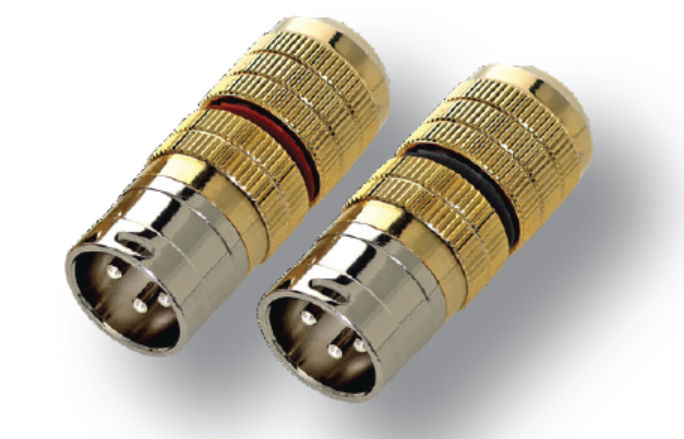
L'uso della nostra tecnologia di propagazione abbinata nei cavi digitali è stato a dir poco un punto di svolta per la trasmissione audio digitale. Equilibrio tonale più aperto, più dinamico e completamente neutro. Questo è un cavo AES/EBU di livello di riferimento che non scende a compromessi. Terminazioni standard: Cardas CG XLR. Terminato a mano a Bandon, Oregon. Progettazione/Costruzione: Conduttori: Nucleo in kevlar a propagazione abbinata, grado 1 ultra fine, rame privo di ossigeno puro al 99,9999% con rivestimento trasparente SPN (Litz), dimensioni del calibro ridimensionate secondo le proporzioni del rapporto aureo e vanno da 41 AWG a 39 AWG. Geometria dello strato incrociato, isolato in una guaina in PTFE estruso ultra sottile.Geometria: triade equilatera a 3 conduttori con tubi d'aria in LDPE antistatico legati con nastro adesivo in PTFE impregnato di carbonio. Geometria specifica per raggiungere lo standard 110 ohm AES/EBU. Rifinito in una giacca in TPR estruso ultra morbido. Calibro: 3x25,5 AWG Diametro esterno: 0,355"/9,01 mm
CARDAS CLEAR DIGITAL RCA/RCA
Quando hai bisogno di un cavo digitale coassiale da 75 ohm per la tua riproduzione digitale di fascia alta, non cercare oltre. Clear Digital utilizza i nostri conduttori di punta Matched Propagation per trasferire i tuoi contenuti digitali in modo rapido e preciso. È il cavo coassiale più neutro, dettagliato e rivelatore che abbiamo mai prodotto. Progettato per integrare le migliori apparecchiature digitali sul mercato, questo estrarrà ogni minimo dettaglio. Terminazioni standard: Cardas SRCA o BNC. Terminato a mano a Bandon, Oregon. Progettazione/Costruzione: Conduttori: Nucleo in kevlar a propagazione abbinata, grado 1 ultra fine, rame privo di ossigeno puro al 99,9999% con rivestimento trasparente SPN (Litz), dimensioni del calibro scalate in base alle proporzioni del rapporto aureo e gamma da 41 AWG a 39 AWG. Geometria dello strato incrociato, isolato in una guaina in PTFE estruso ultra sottile. Geometria: Conduttore singolo coassiale con tubi d'aria in LDPE antistatico legati con nastro adesivo in PTFE. Rifinito in un rivestimento in TPR estruso ultra morbido Calibro: 1x25,5 AWG Diametro esterno: 0,350"/8,89 mm
CARDAS CLEAR HIGH USB
Clear High Speed Serial Buss prende il nostro cavo USB Clear Serial Buss e aggiunge uno speciale cavo dati ad alte prestazioni utilizzando conduttori argentati. Ogni coppia di conduttori in entrambi i cavi è discretamente schermata e ogni cavo ha la propria doppia schermatura. Questo cavo USB ultra premium aggiunge profondità e realismo e immagini migliorate al tuo sistema digitale. Un notevole miglioramento rispetto al nostro Clear Serial Buss già ad alte prestazioni. Clear High Speed Serial Buss USB è ideale per l'uso con audio digitale ad alta risoluzione. Terminazioni standard: USB da A a B, Mini B, Micro B. Sono disponibili alcune terminazioni personalizzate. Progettazione/Costruzione: Conduttori: Nucleo in kevlar a propagazione abbinata, grado 1 ultra fine, rame privo di ossigeno puro al 99,9999% con rivestimento trasparente SPN (Litz), dimensioni del calibro ridimensionate in base alle proporzioni del rapporto aureo. Geometria dello strato incrociato, isolato in una guaina in PTFE estruso ultra sottile. Conduttori dati in rame placcato argento a nucleo solido. Geometria: doppio conduttore stella-quadruplo asimmetrico a 8 conduttori. I conduttori che trasportano il segnale sono un doppino intrecciato schermato. I conduttori di potenza e di segnale sono legati con nastro PFA. Lo schermo finale è costituito da nastro in alluminio/mylar, rame stagnato e filo smaltato. La giacca esterna è in TPR. Calibro: 2x25,5 AWG + 2x21,5 AWG + 23,5 AWG + 30 AWGDiametro esterno: circa 0,453"/11,50 mm
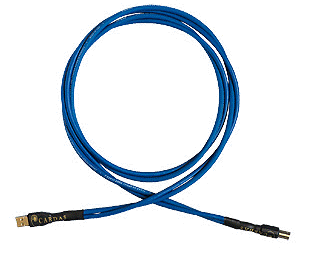
CARDAS CLEAR USB
Cardas
Clear USB è un cavo musicalmente neutro e suona allo stesso modo a
qualsiasi lunghezza utilizzabile. Clear USB è ottimizzato per
un'impedenza di trasferimento costante piuttosto che per
un'impedenza caratteristica a onda intera. Terminazioni standard:
USB da A a B, Mini B, Micro B. Sono disponibili altre terminazioni
personalizzate. Progettazione/Costruzione: Conduttori: Nucleo in
kevlar a propagazione abbinata, grado 1 ultra fine, rame privo di
ossigeno puro al 99,9999% con rivestimento trasparente SPN (Litz),
dimensioni del calibro ridimensionate in base alle proporzioni del
rapporto aureo. Geometria dello strato incrociato, isolato in una
guaina in PTFE estruso ultra sottile. Geometria: Star-quad
asimmetrico 4. I conduttori che trasportano il segnale sono un
doppino intrecciato schermato. I conduttori di potenza e di segnale
sono legati con nastro PFA. Lo schermo finale è in alluminio/mylar,
rame stagnato e filo smaltato. La giacca esterna è in TPR. Calibro:
2x25,5 AWG + 2x21,5 AWG Diametro esterno: 0,220"/5,58 mm
CARDAS CLEAR CAT7
Con l'avvento dei dischi rigidi di rete e dei servizi di streaming ad alta risoluzione, la domanda di cavi Ethernet di qualità superiore è esplosa. Chi non vorrebbe una maggiore velocità, una maggiore larghezza di banda e meno rumore? Terminazioni standard: Telegartner RJ45. Terminato a mano a Bandon, Oregon.Progettazione/Costruzione: Conduttori: Grado 1, rame privo di ossigeno puro al 99,9999%.Geometria: Disposti in coppie schermate, ciascuna coppia con il proprio filo di drenaggio. Il fascio di coppie è avvolto in uno scudo di lamina e poi in uno scudo intrecciato. Rivestito in TPR flessibile. Calibro: 8x24 AWG Diametro esterno: 0,315"/8 mm
Cardas Clear USB is a musically
neutral cable and sounds the same at any usable length. Clear
USB is optimized for constant transfer impedance rather than a
full wave characteristic impedance. Termination Options:
Clear USB is available with Type-A, Type-B, and mini-B
connectors CARDAS PARSEC DIGITAL RCA/RCA
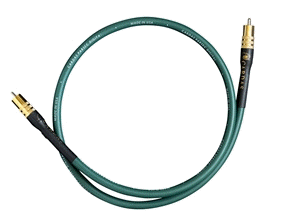
Parsec Digital Our entry level coax digital, Parsec Digital is an upgrade from our popular High Speed Data, with improved performance, better terminations, increased flexibility, and a softer jacket that matches the dark green of the other Parsec cables. Designed for 75 ohm digital applications, with RCA or BNC termations. Termination Options: RCA (GRMO) or BNC. Standard configuration is RCA-to-RCA.
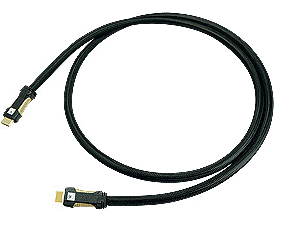
CARDAS HDMI DIGITAL
CARDAS CLEAR BEYOND x2 PHONO
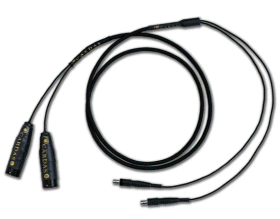
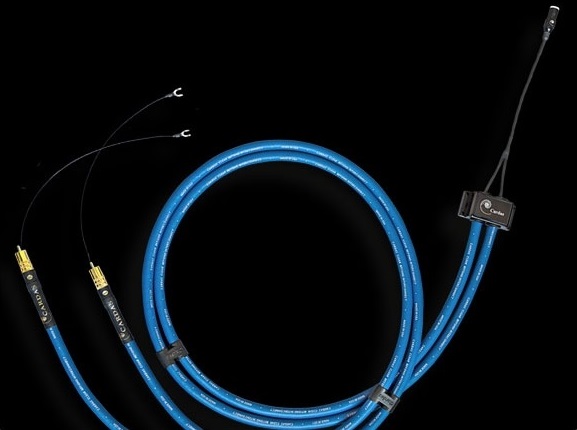
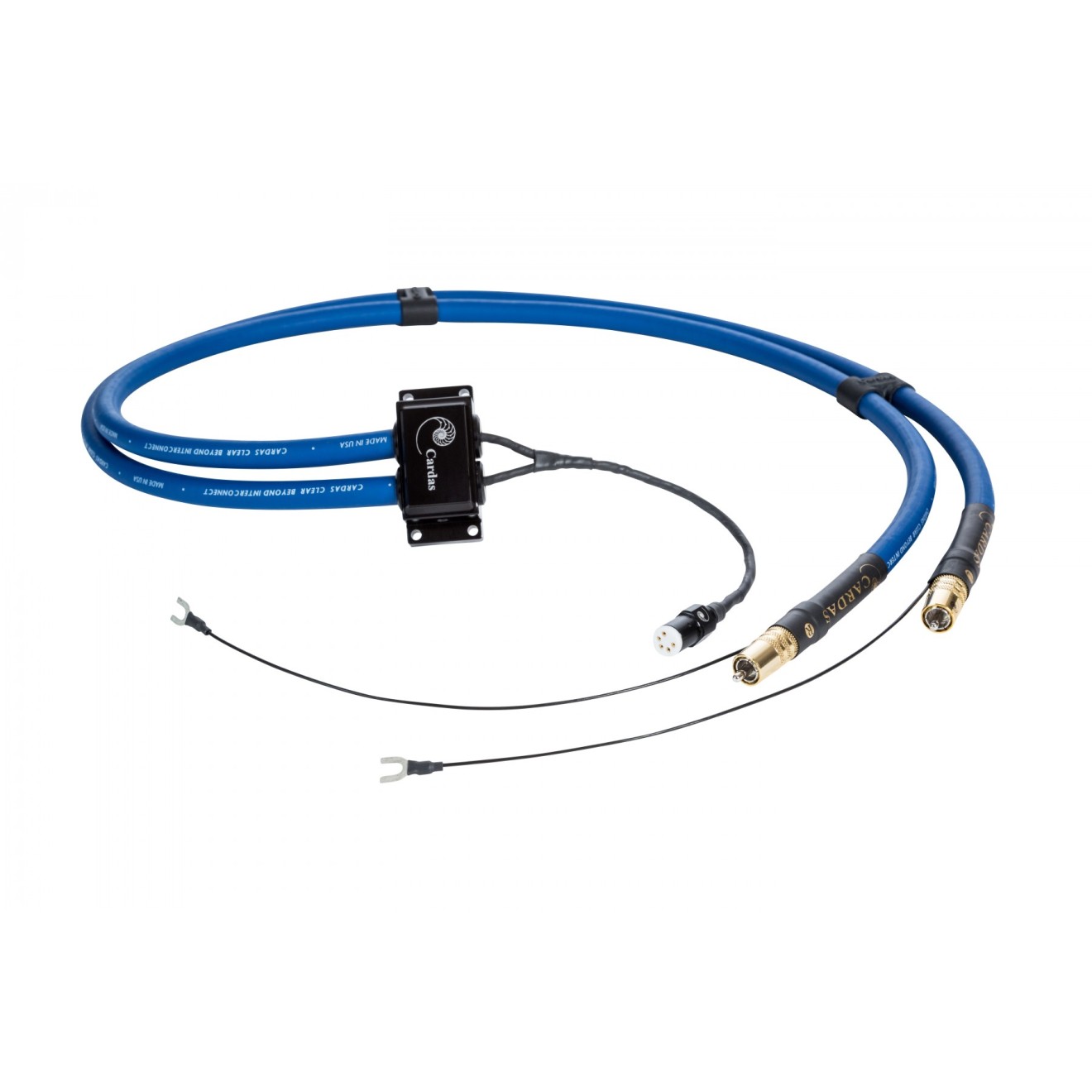
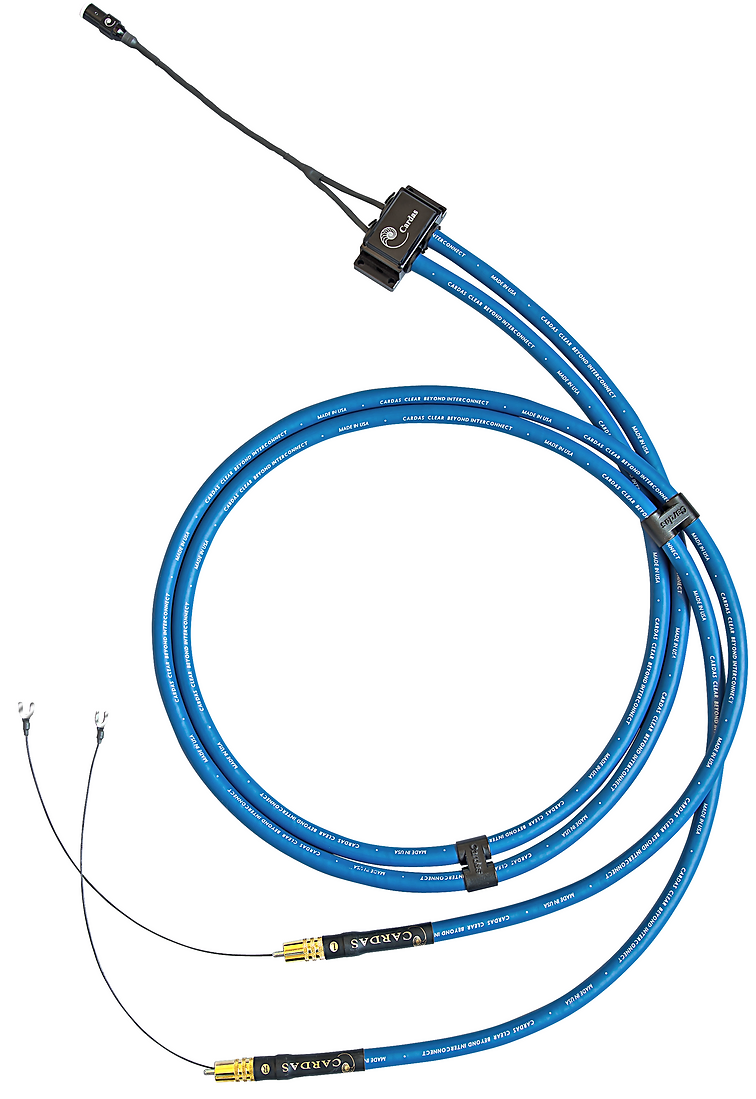
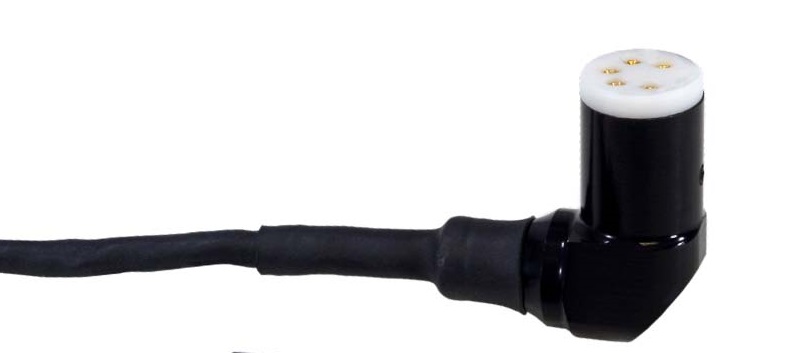
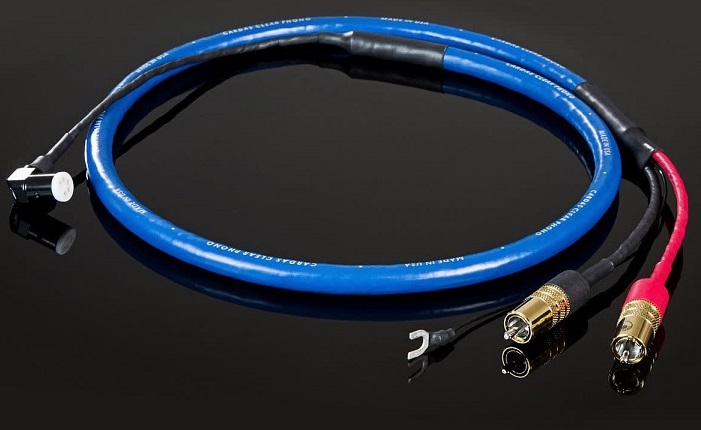
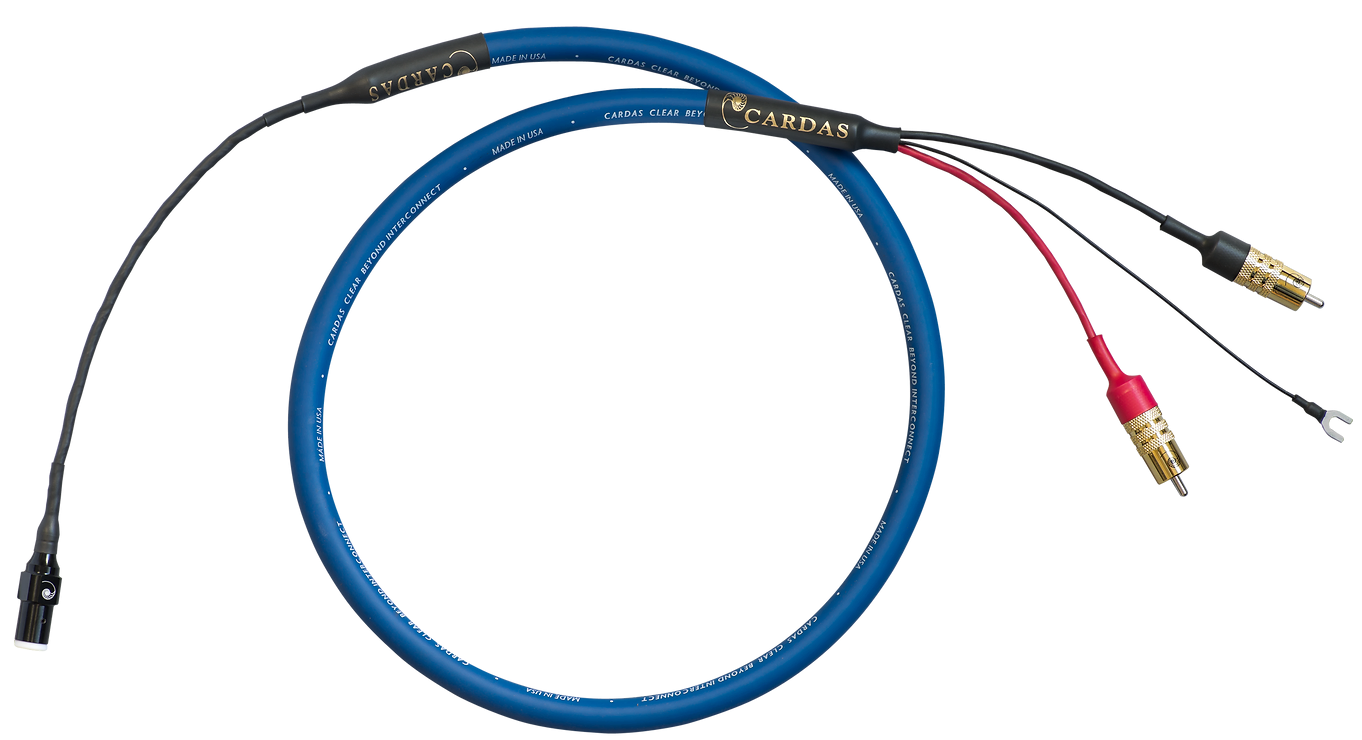
Clear Beyond Dual Phono è stata una "voce di menu segreta" per un po' di tempo. Ci è stato chiesto di preparare una coppia di cavi di interconnessione Clear Beyond da utilizzare con un braccio DIN a 5 pin in un sistema analogico estremo mostrato all'High End Show di Monaco. Poi si è sparsa la voce e quelli che lo sapevano se ne sono innamorati. Ora Clear Beyond Dual Phono è sfuggito al mercato. Un singolo tratto di Clear Beyond Interconnect, con schermature multiple e otto conduttori di propagazione abbinati da 26,5 AWG, è un cavo phono dalle prestazioni elevate. Sono disponibili terminazioni personalizzate, comprese le connessioni Cardas R-DIN e SME 90° DIN. Terminazioni standard: da Cardas S-DIN a SRCA. Terminato a mano a Bandon, Oregon. Conduttori: nucleo in Kevlar a propagazione abbinata, grado 1 ultra fine, rame OFHC puro al 99,9999% con rivestimento trasparente SPN (Litz), dimensioni del calibro ridimensionate in base alle proporzioni del rapporto aureo e vanno da 47 AWG a 39 AWG. Geometria dello strato incrociato, isolato in una guaina in PTFE estruso ultra sottile. Geometria: Star-Quad 4 conduttori con tubi dell'aria in LDPE antistatico legati con nastro adesivo in PTFE impregnato di carbonio. Lo strato esterno utilizza tubi d'aria in PTFE scalati 1.618 volte più grandi dei tubi centrali per sospendere lo schermo composito di rame stagnato e filo magnetico lontano dai conduttori che trasportano il segnale. Rifinito in una giacca in TPR estruso ultra morbido. Calibro: 8x26,5 AWG Diametro esterno: 0,511”/13 mm
CARDAS CLEAR BEYOND PHONO
Clear Beyond Phono, una meraviglia del moderno design dei cavi, presenta i nostri conduttori di propagazione abbinati più avanzati. Clear Beyond Phono apporta notevoli miglioramenti nell'immagine spaziale, nella dinamica e nell'impatto a bassa frequenza, pur mantenendo la classica musicalità Cardas. Clear Beyond Phono si basa su oltre 30 anni di dedizione incessante di Cardas Audio alla perfezione dei cavi ad alte prestazioni. Più di ogni altra cosa, Clear Beyond Phono è musicale. L'equilibrio tonale è completamente neutro con velocità e trasparenza insuperabili. Ognuno è realizzato su ordinazione e terminato a mano solo dai nostri tecnici senior. Sono disponibili terminazioni personalizzate, comprese le connessioni Cardas R-DIN e SME 90° DIN. Terminazioni standard: Cardas S-DIN a SRCA o RCA a RCA. Saldato a mano a Bandon, Oregon. Conduttori: Nucleo in kevlar a propagazione abbinata, rame OFHC puro di grado 1,99,9999% ultra fine con rivestimento trasparente SPN (Litz), dimensioni del calibro ridimensionate secondo le proporzioni del rapporto aureo e vanno da 47 AWG a 39 AWG. Geometria dello strato incrociato, isolato in una guaina in PTFE estruso ultra sottile. Geometria: Star-Quad 4 conduttori con tubi d'aria in LDPE antistatico legati con nastro in PTFE impregnato di carbonio. Lo strato esterno utilizza tubi d'aria in PTFE scalati 1.618 volte più grandi dei tubi centrali per sospendere lo schermo composito di rame stagnato e filo magnetico lontano dai conduttori che trasportano il segnale. Rifinito in una giacca in TPR estruso ultra morbido. Calibro: 4x26,5 AWG Diametro esterno: 0,511"/13 mm
CARDAS CLEAR PHONO
Clear phono cable is a four
conductor version of the Clear interconnect. It uses the same
matched propagation conductors to achieve the most revealing
phono cable we have ever developed. Termination Options:
Available with Cardas Straight or Right-Angle DIN plugs;
terminated with our top-of-the-line SRCA plugs. Cardas CG XLR
plugs also available
CARDAS C ROSS PHONO
Cross
Phono At the top of our Cross line of Phono Cables, Cross is a
four conductor, double-shielded phono interconnect for use with
DIN-output turntables. Termination Options: Available with
Cardas Straight or Right-Angle DIN plugs; terminated with our
top-of-the-line SRCA plugs. XLR plugs also available. CARDAS MICROTWIN PHONO
CARDAS iLINK RCA -MINI JACK
CARDAS iLINK MINI JACK-MINI JACK
MINI JACK-MINI JACK
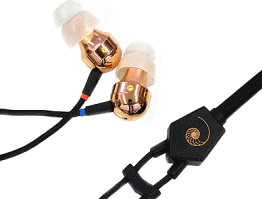
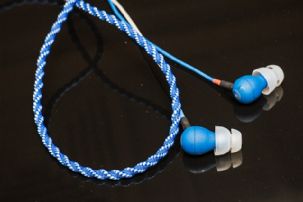
Cardas Ear Speakers: Both Cardas Ear Speaker models are original George Cardas designs, with Cardas cables. Bodies are machined from brass, and feature Golden Spiral curves. The EM5813 is copper plated & clear coated; the A8 has a rubberized ABS coating. The EM5813 has an 11mm driver with Neodymium magnet, and an innovative technique to prevent eddie-currents. Cabled with Cardas Clear Light Headphone cable. The A8 has a 10.85mm Ultra Linear, Contour Field, Dual Magnet Driver. The A8 is cabled with an all new spiral cable that is extremely light, flexible, and strong.
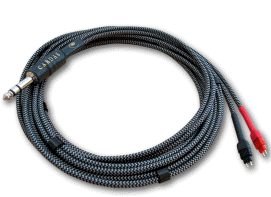
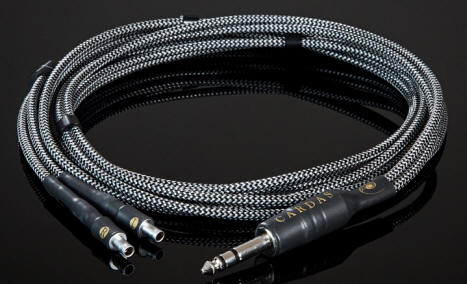
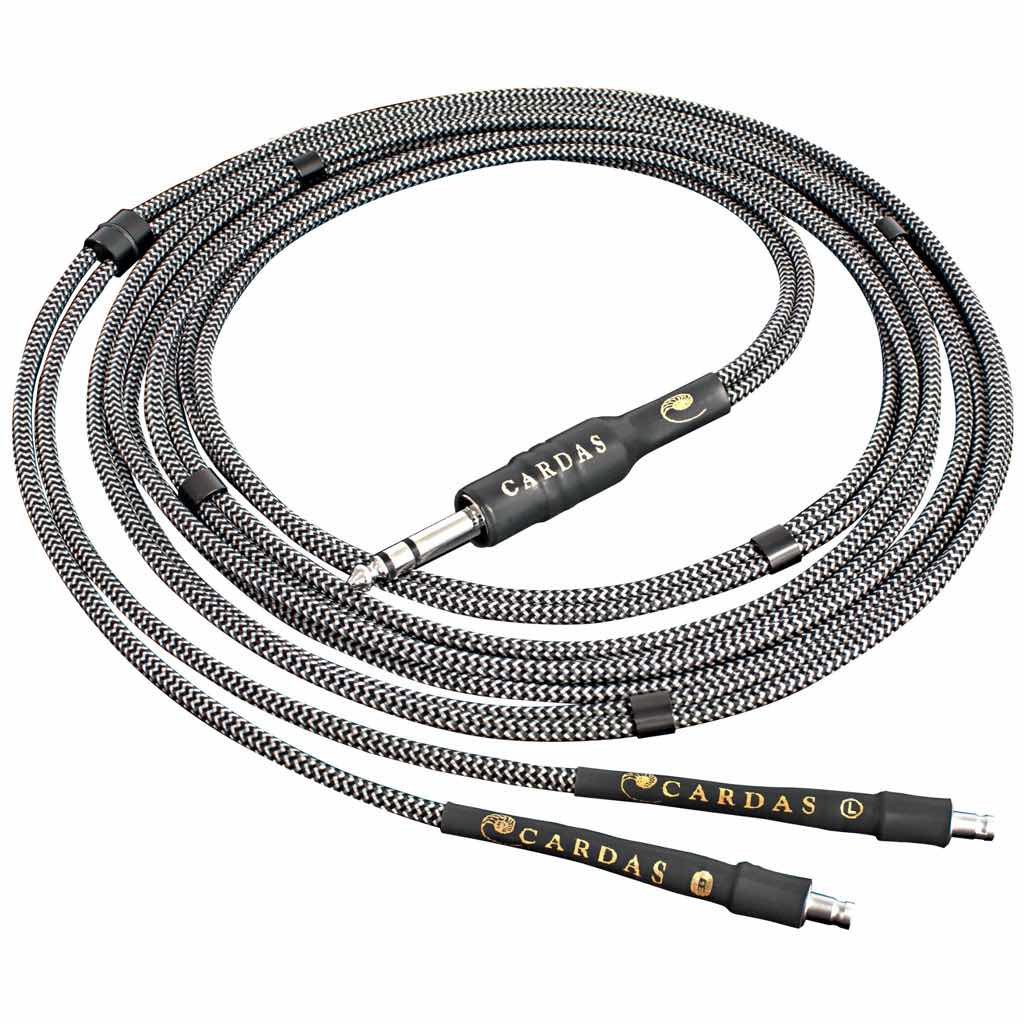
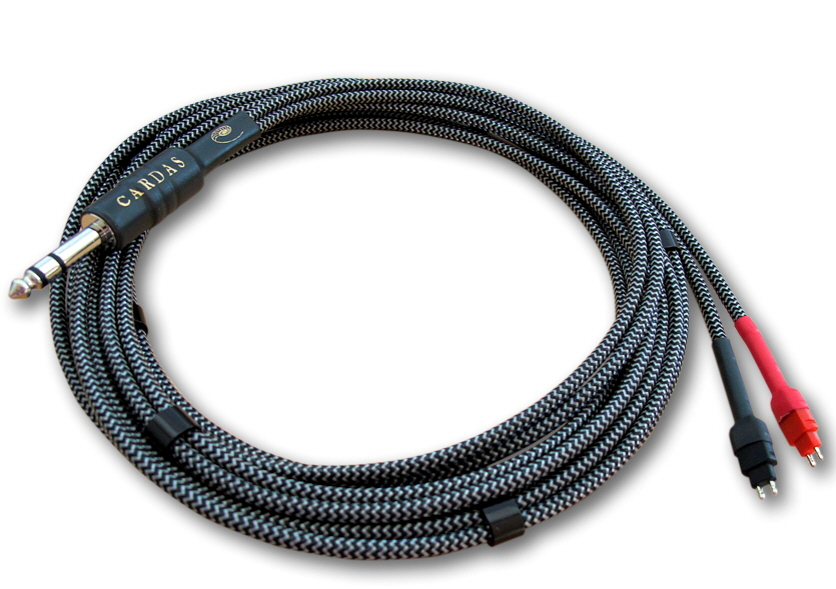
CARDAS CLEAR BEYOND Headphone Cable
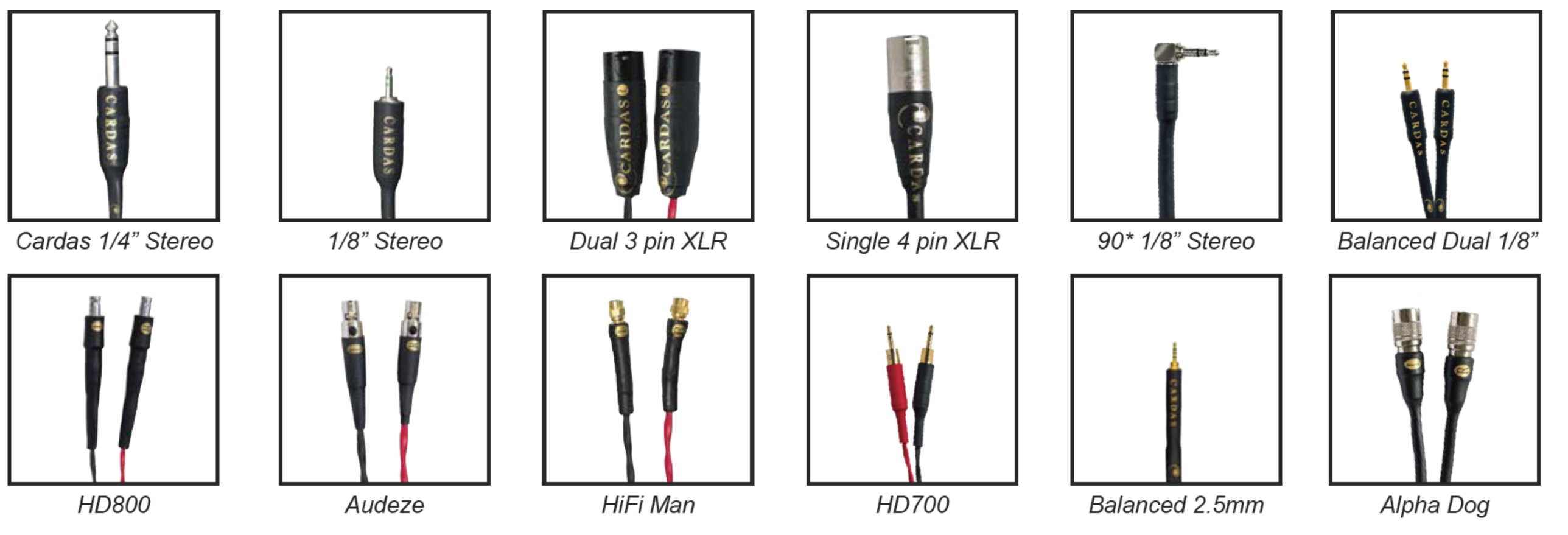
Uno dei nostri progetti di ricerca e sviluppo più impegnativi ed estesi è finalmente giunto a buon fine. Il progetto Clear Beyond Headphone Cable è iniziato grazie alla sollecitazione di una manciata di clienti affezionati che volevano vederci spingere oltre i limiti e superare il nostro cavo Clear Headphone Cable. Questo non era un compito da poco e richiese diversi anni. Clear Headphone Cable ha richiesto lo sviluppo del primo conduttore di propagazione concentrico miniaturizzato, che presentava sfide sia nella produzione che nella terminazione. Una volta conquistati quelli, avevamo un cavo che ampliava le prestazioni di ogni cuffia su cui lo provavamo. Ma l'idea di passare alla fase successiva era scoraggiante. Abbiamo iniziato, naturalmente, cercando modi per migliorare il direttore d'orchestra. Prendendo spunto da Clear Beyond Interconnect, abbiamo perfezionato la cordatura e l'intrecciatura, creando una disposizione più fine del filo di rame cardas ultra puro di grado 1. Ciò ha prodotto notevoli miglioramenti, ma sapevamo che avremmo potuto andare oltre facendo qualcosa che non avevamo mai fatto prima: l'aggiunta di argento. Il nostro nuovissimo conduttore di propagazione abbinato alla metallurgia ibrida presenta un filo da 30 awg di filo d'argento di grado 1 Cardas, oltre al molti miglioramenti che abbiamo apportato dal punto di partenza di Clear Headphone Cable. I risultati sono spettacolari. Come con Clear Headphone, Clear Beyond Headphone ha due cavi separati, uno per ciascun canale. Filo blu e nero intrecciato e unito con un bellissimo hardware per dargli "l'aspetto" che merita. Terminazione standard: ci sono troppe opzioni disponibili per elencarle tutte. Vi preghiamo di contattarci per conoscere le ultime aggiunte alla nostra vasta selezione di terminazioni per cuffie. Design/Costruzione: Conduttori: nucleo in kevlar a propagazione abbinata, grado 1, rame privo di ossigeno puro al 99,9999% con rivestimento trasparente SPN (Litz), dimensioni del calibro scalate a Golden Proporzioni di rapporto. Nucleo in argento di grado 1 da 30 AWG. Geometria dello strato incrociato, isolata in una guaina avvolta in nastro di PTFE.Geometria: due conduttori avvolti concentricamente affiancati da fibre antistatiche. Guaina esterna in nylon intrecciato con hardware placcato in rame. Calibro: 8x25,5 AWG + 4x30 AWG (17,5 AWG per polarità) Diametro esterno: 0,182"/4,63 mm
CARDAS CLEAR Headphone Cable
Abbiamo preso il cavo dell'altoparlante Clear e l'abbiamo ridimensionato per funzionare solo con le migliori cuffie del pianeta. Questa è una corsa dual mono (due cavi completamente isolati per sinistra e destra) proprio come una coppia di cavi per altoparlanti. Perfetto per operazioni bilanciate o single ended. Completamente neutrale, dettagliato, con dinamiche realistiche. Questo cavo ti aiuta a dimenticare le cuffie e a perderti nella musica. Design/Costruzione: Conduttori: Nucleo in kevlar a propagazione abbinata, grado 1, rame privo di ossigeno puro al 99,9999% con rivestimento trasparente SPN (Litz), dimensioni del calibro scalate al rapporto aureo proporzioni. Geometria dello strato incrociato, isolata in una guaina avvolta in nastro FEP.Geometria: doppi conduttori mono doppino con tubi d'aria in LDPE antistatici legati con nastro in PTFE impregnato di carbonio. Lo strato esterno utilizza tubi d'aria in PTFE scalati 1.618 volte più grandi dei tubi centrali per sospendere lo schermo composito di rame stagnato 42 AWG e filo magnetico lontano dai conduttori che trasportano il segnale. Rifinito in una giacca in TPR estruso ultra morbido. Calibro: 8x26,5 AWG Diametro esterno: 0,170"/4,31 mm
CARDAS EM5813 CUFFIA
EM5813 Ear Speakers Cardas Ear Speakers are efficient, natural, musical, and are the result of years of meticulous design by George Cardas. Components of the EM5813 were manufactured in Oregon, California, and The People's Republic of China. Custom alloys were sourced from Italy, Germany and the US, magnets from China, and thin film from Japan. he EM5813 can be ordered with - or reterminated with - balanced connections for use with Astell & Kern or Pono
CARDAS A8 CUFFIA
Legenda istruzioni
Nota bene * Per ordinare o avere gli ultimi prezzi aggiornati telefona al 0174 670100 o invia un E-mail a info@newaudio.it *I prezzi indicati sono di listino ufficiale delle case produttrici ,nel caso di diffusori si riferisce al prezzo del singolo diffusore per offerte ed eventuali promozioni telefonare o inviare e-mail. *Il presente listino sostituisce ed annulla ogni precedente. Le caratteristiche e i prezzi indicati possono variare senza preavviso telefonare o inviare un e-mail per ulteriori domande e conferme sui prezzi sopra riportati. *Tutti i marchi citati nel presente listino sono di proprietà e registrati alle rispettive Case Produttrici *Prezzi franco nostro magazzino
|



.png)
.png)
.png)




 Performance
To create Clear Beyond Power XL, we took our very popular Clear Beyond Power,
and scaled everything up. Bigger conductors, better shielding and improved noise
filtering. e then added yet another level of noise filtration, extending the
path to ground to three times the length of the cable itself through a simple
and graceful geometry that could only come from the mind of George Cardas. This
is our most sophisticated power cable ever, and is designed to provide the
largest, most power hungry amplifiers with clean, high current, while also
giving sensitive source components the stable, clear and noise free power they
require for the absolute highest fidelit . Terminated with our all new premium
Cardas E-5 connectors, featuring silver/rhodium plated copper contact surfaces,
Clear Beyond Power XL is designed for the most demanding electronics. Standard
Terminations: Soldered and crimped Cardas E-5 premium power plugs with silver/
rhodium plated solid copper contacts. Terminated by hand in Bandon, Oregon.
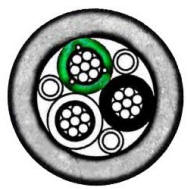
Design/Construction Conductors: Grade 1, 99.9999% pure oxygen free tin plated
copper, gauge sizes scaled to Golden Ratio proportions. Cross-field layer
geometr , insulated in a TPE jacket. Each conductor has multiple lay lengths and
has it’s own shield. Geometry: Entire cable is double shielded with tin plated
copper and magnet wire. Twisted triad mixed with PVC air tubes bound with FEP
tape wrap. Super flexible TPR outer jacket Filtration: A torodial ground filter
is built into the termination and works in unison with a ground leg extension
system. Gauge: 3x9 AWG Outside Diameter: 0.715”18.17mm
Performance
To create Clear Beyond Power XL, we took our very popular Clear Beyond Power,
and scaled everything up. Bigger conductors, better shielding and improved noise
filtering. e then added yet another level of noise filtration, extending the
path to ground to three times the length of the cable itself through a simple
and graceful geometry that could only come from the mind of George Cardas. This
is our most sophisticated power cable ever, and is designed to provide the
largest, most power hungry amplifiers with clean, high current, while also
giving sensitive source components the stable, clear and noise free power they
require for the absolute highest fidelit . Terminated with our all new premium
Cardas E-5 connectors, featuring silver/rhodium plated copper contact surfaces,
Clear Beyond Power XL is designed for the most demanding electronics. Standard
Terminations: Soldered and crimped Cardas E-5 premium power plugs with silver/
rhodium plated solid copper contacts. Terminated by hand in Bandon, Oregon.
Design/Construction Conductors: Grade 1, 99.9999% pure oxygen free tin plated
copper, gauge sizes scaled to Golden Ratio proportions. Cross-field layer
geometr , insulated in a TPE jacket. Each conductor has multiple lay lengths and
has it’s own shield. Geometry: Entire cable is double shielded with tin plated
copper and magnet wire. Twisted triad mixed with PVC air tubes bound with FEP
tape wrap. Super flexible TPR outer jacket Filtration: A torodial ground filter
is built into the termination and works in unison with a ground leg extension
system. Gauge: 3x9 AWG Outside Diameter: 0.715”18.17mm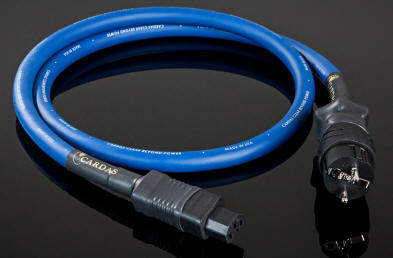

.gif)

.gif)






 Clicca
per qui per vedere : FOTO PRODOTTO
Clicca
per qui per vedere : FOTO PRODOTTO Clicca
per qui per vedere : ISTRUZIONI PRODOTTO
Clicca
per qui per vedere : ISTRUZIONI PRODOTTO